7 steps to a successful VBAC
What is a VBAC or VBA2C?
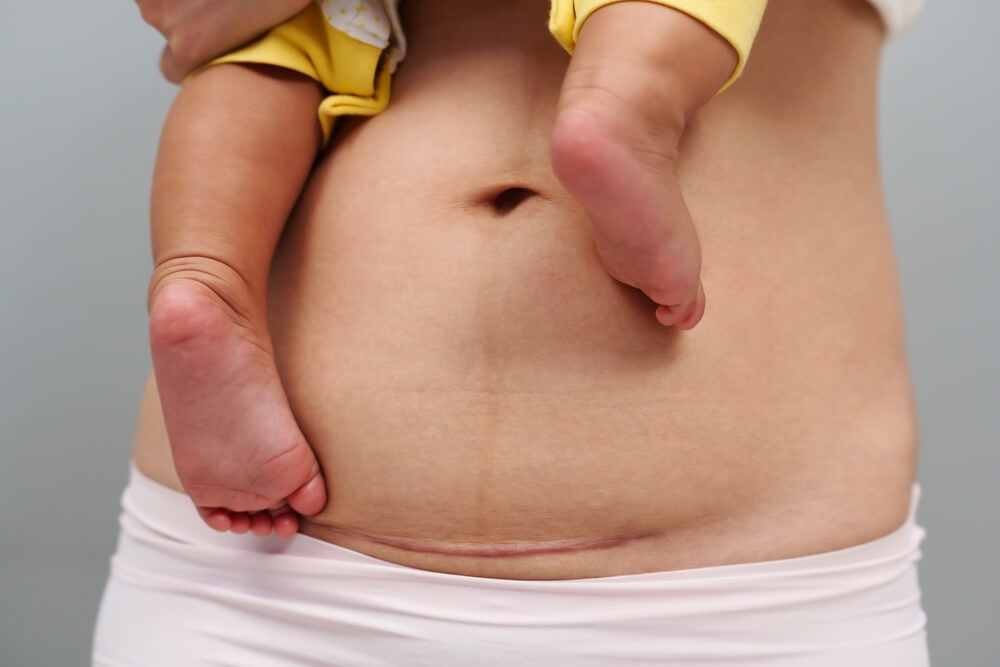
A VBAC is a Vaginal Birth After Cesarean or C-section. So when you see VBA2C that is a vaginal birth after 2 c-sections or 2VBAC is the second vaginal birth after a c-section (1 c-section followed by 2 vaginal births). Statistically 25-33% of women have a c-section. Some providers still have the old thinking that once a cesarean, always a cesarean, but this is not evidence based! 60-80% of women that try for a VBAC are successful. That’s great news!
“A baby is no more likely to die in a VBAC attempt than in a repeat c-section, yet it is this fear of a baby’s dying in a VBAC attempt that drives many women to have a repeat c-section. Let me illustrate this fact with data. The combined risk of stillbirth at term and neonatal death (death during the first 28 days of life) for VBAC attempts and repeat c-sections are not statistically different. When only low-risk women are included in the analysis, the neonatal death rate is higher for repeat c-sections (1.36 per 1,000 live births) than for VBACs (1 per 1,000 live births). Further, the fetal death rate due to uterine rupture in a VBAC attempt is so low (estimated to be between 2 to 4.7 per 10,000 deliveries) that several thousand repeat c-sections would need to be performed to prevent even one fetal death as a result of uterine rupture.”
Cut It Out by Theresa Morris
Here are a few tips to have a successful VBAC.
Educate yourself on your options
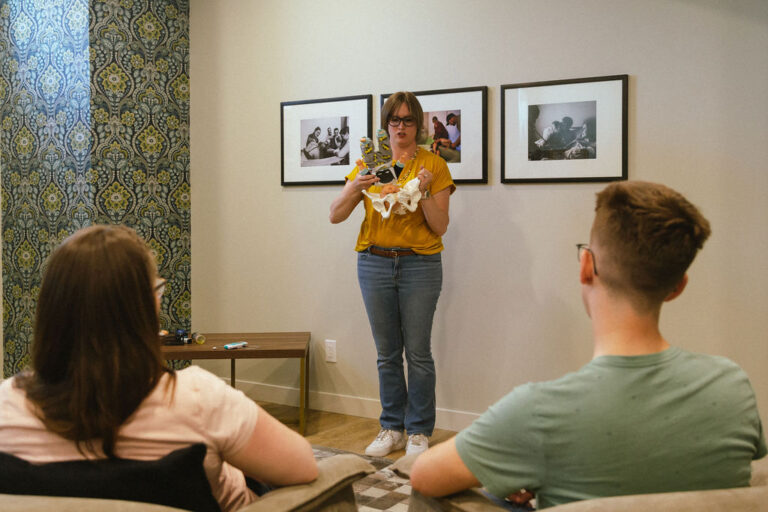
Take a childbirth class NOT given by the hospital.
“Hospital-based childbirth education classes have been shown to normalize interventions and c-sections. Women should seek out independent classes to learn about the empirical evidence around birth practices and interventions. Women who take these classes will be more informed about labor and birth, and this step can immediately help reduce their chance of having a c-section, largely because women who take such classes are more knowledgeable about and can therefore avoid interventions that increase their risk of c-section.”
Cut It Out by Theresa Morris

Do your own reading.
Here is a list of books to read when considering and preparing for a VBAC:

Baby Got VBAC: An Inspiring Collection of Wisdom for Better Births After a Cesarean
Give Birth a Chance: How to Prepare for an Empowered VBAC by Ilia Blandina
Birth after Cesarean: Your Journey to a Better Birth by Hazel Keedle, PhD
Optimal Care in Childbirth: The Case for a Physiologic Approach by Henci Goer and Amy Romano
Other options are to follow instagram accounts, listen to podcasts, take online VBAC courses, and read blogs online.
Be prepared to insist on evidence based practices - such as:
“Women should refuse ultrasound in the last month of pregnancy unless maternity providers can demonstrate a high-risk condition that would require such strict surveillance because women who have ultrasounds during the last month of pregnancy are more likely to have c-sections. Women should also refuse induction or a scheduled c-section because it is suspected that their baby is macrosomic. We know that delivering suspected macrosomic babies by c-section does not improve birth outcomes. Further, low-risk women should refuse continuous CTG monitoring, non-medically indicted inductions, routine augmentation, and having their membranes artificially ruptured (which increases pain and c-section risk but does not shorten the second stage [pushing] of labor). On the other hand, women should insist on being monitored intermittently, using movement during labor to help deal with pain and to move labor along, and having the choice to proceed with VBAC’s.”
Cut It Out by Theresa Morris
Hire a doula
Evidence suggests that women who are attended in birth by doulas have shorter labors, less interventions, and lower rates of c-sections. Doulas do many things to help during labor. I want to highlight 2 here.

They form part of the support team with the partner, mother, sister, etc. They help provide constant support to the laboring mother. Think bathroom breaks, food breaks, taking a quick nap or just needing some air to come back fresh. No matter who is supporting the laboring mother, they will need to take care of these basic needs and honestly, it is great for the support team’s morale and positivity throughout the experience. If you have at least 2 support people, the laboring mother will never be left alone.
Doulas believe in your ability to birth. This will help boost your confidence both before and during labor. This confidence will help you to advocate for what you want based on your understanding and research. Your doula will then support your decisions and help make sure your care team (doctors, nurses, midwives) do to.
Doulas can also do a lot to help ease discomfort during contractions, help you stay mobile during labor (even with an epidural), and support optimal positioning for you and baby.
“The primary concern and most controversial thing about VBAC is the chance of uterine rupture. Statistically, uterine rupture happens in 0.4% of TOLAC (Motomura, 2017). That equals 1 in 240. Now, as with all things, probability should be considered and assessed. When uterine rupture does happen, most of the time it is quickly detected and a provider is able to get the baby out quickly (usually by repeat Cesarean) before any long-term damage happens to the mom and/or baby. In fact, only 6% of uterine ruptures are complete or catastrophic. The National Institute of Health (NIH) reports the odds as 0.13%, which ends up being one infant death in every 769 TOLACs”
The VBAC link
*TOLAC means Trial Of Labor After Cesarean.
Process your previous birth

Especially if your previous birth was traumatic. Having unprocessed trauma can mess with hormones during labor which may lead to a stall.
Talking to family and friends can help, or talking to people who were present at your previous birth.
Having a doula at the birth can help you to process any feelings that may arise during labor.
Hire a professional if possible to work through what you can before the birth. Your feelings are valid.
Marii-Heleen Motsmees is a registered psychologist in Calgary. She specializes in perinatal mood and anxiety disorders and provides therapy virtually to women in Alberta, Nova Scotia, and New Brunswick. If you are struggling, reach out. It rarely just “goes away” on its own and if it does it takes way longer.
Get baby into an optimal position
A well positioned mother and baby will make for an easier more straight forward and faster birth.
Spinning Babies and/or the Miles Circuit
Both Spinning Babies and the Miles Circuit are great exercises to do if you are experiencing slow or no progress during labor.
Spinning Babies
Spinning Babies releases tension in the mother to help create space for the baby to pass through. Releasing tension, creating balance and space is their main philosophy. Doing the exercises during pregnancy and labor can help baby to turn through the birth canal and be in the best position possible through-out labor.
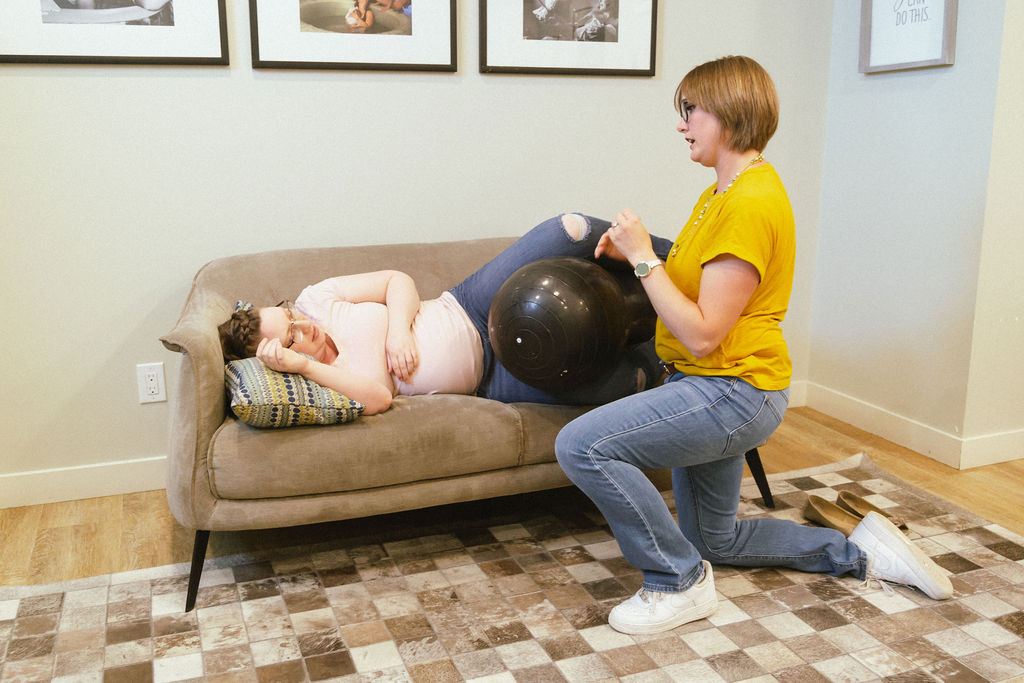
The Spinning Babies 3 balances are:
The Jiggle
Forward Leaning Inversion
Side-Lying Release
While these are the 3 main balances, they have other exercises, stretches, and techniques they recommend depending on baby’s position in the pelvis. I recommend hiring a doula who is trained in these techniques.
Birth is “easier” when we have balance in the pelvis (including ligaments, fascia, and muscles within the pelvis).
Spinning Babies
Miles Circuit

The Miles Circuit has similar but not identical positions as Spinning Babies. The Miles Circuit is 3 steps.
Open knee chest
Exaggerated Side Lying Position
Get Up and Moving (prioritizing asymmetrical positions like lunges and curb walking)
These positions help baby to get into a good position by giving them space and releasing tension. Check out their website for step by step instructions on how to do these positions.
Gutsy enough to change birth on earth!
Spinning Babies
Chiropractic Care, Massage Therapy, and Acupuncture
Chiropractic care and massage therapy during pregnancy can help ease tension in the body.
A chiropractic adjustment ensures better alignment which can help baby get into a better position.
Acupuncture during pregnancy can help ease back pain and pelvic pain during pregnancy and labor. It can also be used to help start labor naturally, if you are looking to avoid a medical induction.

Create a birth plan

Some people are hesitant to create a plan since “birth is unpredictable” and never goes according to plan. However, it is essential to do your research and create a game plan. Get your whole team to understand what is important to you and why.
You wouldn’t go hiking without planning which route to take, what you were going to eat, who you were going with, and a first aid kit. You would also plan what to do in case of a landslide, encountering a dangerous animal, or getting lost. So why not make a plan for the different possibilities that can happen in birth.
Some common complications include:
Mother
High blood pressure
Fever
Exhaustion
GBS positive
Water breaks before contractions start
Baby
Variations in the heartrate (accelerations vs decelerations)
Low fluid
Big/small baby
Meconium in the fluid
Slow progress
Have a game plan for what you want to do in the case of these complications.
There are not an infinite amount of possibilities in birth.
Give birth at home or at a birth centre
Where you give birth makes a difference! It can mean the difference between a cesarean or assisted delivery (forceps or vaccum) and a vaginal birth.

A study compared outcomes among women planning home birth with home-birth-eligible women planning hospital birth with the same midwives or with physicians. The cesarean rate in women planning home birth was 6%, versus 12% for the planned midwife-attended hospital births, versus 18% for the planned physician-attended births. A rural maternity hospital without cesarean capability serving Native Americans reported a 7% cesarean rate versus a 21% U.S. national rate while achieving a similar perinatal mortality rate compared with the national average, despite serving a population at greater-than-average risk. Finally, a study of 171,000 New Jersey births grouped obstetricians according to whether their cesarean rates were low (28%). Obstetricians maintained their cesarean rankings in all subgroupings: nulliparous women, women with prior cesarean, women at term, preterm (33-36 weeks), and posterm and women with diagnoses of dystocia, fetal distress, preeclampsia/eclampsia, placenta previa, and placental abruption. Higher cesarean rates did not improve outcomes. Low cesarean rate obstetricians had similar perinatal mortality rates to medium- and high-rate obstetricians despite serving a socioeconomically higher-risk population and performing fewer cesareans in women with complications.
Optimal Care in Childbirth: The Case for a Physiologic Approach by Henci Goer and Amy Romano
Additional Resources to help you prepare for a VBAC or VBA2C
VBAC link
VBAC link has a free essentials guide for preparing for a VBAC. Download it for free on their website.
“Things that are not contraindications to VBAC include suspected big baby, going beyond 40 weeks, short intervals between pregnancies, having a classical or unknown scar type, expecting twins, or having a high BMI. These things do not automatically exclude women from TOLAC.”
VBAC Essentials Quick Guide by www.thevbaclink.com

You can also check out their online course here to get educated about the evidence so you will be a confident decision maker in your birth space.
VBAC Facts
VBAC Facts also has a great online course for expecting parents which you can find here. They review the evidence surrounding VBACs so that you can go in knowing the risks and having a great gameplan for a successful VBAC.
Evidence Based Birth
If you want to read detailed study information about specific complications and interventions, Evidence Based Birth is a great resource. It can be time consuming to research each interventions and should be done prior to labor so you can focus on contractions during labor.
They also have classes https://evidencebasedbirth.com/parentclasses/
“Up to 80% of women who attempt a VBAC will be successful, and VBAC is generally associated with fewer complications than a repeat Cesarean.”
www.thevbaclink.com